
The Way We C.A.R.E.®
Rethinking How We Recognize, Respond to, and Prevent Harm
By Meera Seshadri
Something feels off.
A friend looks uncomfortable. A joke crosses a line. Someone keeps pushing after another has pulled away. A relationship starts to feel controlling. A comment in a group chat makes you pause.
You notice.
But you don't necessarily know how to name what you're noticing, understand what may be happening, or know what to do about it.
“Is this concerning enough to say something? Am I reading the situation correctly? What might this person be experiencing? Will I embarrass someone, or myself, if I'm wrong? What if I make things awkward?”
“What can I actually do?”
This is the space where many decisions are made. It is the space between noticing and acting; where we make sense of what we're seeing, consider what someone else may be experiencing, and decide what to do next. And it is where C.A.R.E.® begins.
What students are saying
As we developed Bringing in the Bystander® College Version 4, we wanted to understand not only whether students recognize opportunities for intervention, but what happens after they notice them.
Through more than 300 survey responses and in-depth student interviews, alongside feedback from licensed partners, campus prevention professionals, facilitators, and current prevention education research, a clearer picture emerged.
Students are often not trying to determine whether harm is obvious. They are deciding whether something feels concerning enough to act on.
Fear of overreacting came up again and again: misreading a situation, misunderstanding what someone else may be experiencing, embarrassing someone, creating conflict, making things awkward, or stepping in when nothing was actually wrong.
At the same time, students appeared ready to act earlier than we sometimes assume.
They weren't necessarily asking, Which intervention strategy am I supposed to use?
“Is this enough to act on?”
“What feels safe to do?”
Those questions are central to how we approached Version 4.
Because uncertainty doesn't have to mean inaction, and it absolutely doesn’t mean you don’t care.
The middle space
Prevention education often asks people to recognize warning signs, identify harm, and learn strategies for responding. All of those skills matter.
But when real life happens, even our best plan of action may fall flat – and we need to be able to pivot.
Students make decisions inside friendships, intimate relationships, teams, classrooms, workplaces, residence halls, student organizations, digital spaces, and communities. They are reading body language while considering who knows whom. They are weighing their own safety alongside someone else's. They are wondering whether their friends will back them up, whether they hold influence in that particular setting, and what happens after they act.
Their comfort, safety, and influence matter too. A roommate may have different access than a stranger. A team captain may have clout that a first-year student does not. A close friend may notice a vibe shift that someone outside the relationship would never see.
What we notice and what we do with what we notice is shaped by who we are, what we carry, where we stand, and who we are in relationships. These same factors influence which choices are possible, authentic to us, and what those choices may cost.
Our findings echoed decades of research on prosocial bystander intervention. Relationship dynamics, social position, expected peer support, confidence in one's ability to act, group norms, and power all shape intervention decisions. These factors are informed by social cognitive theory and an intersectional understanding of how identity, safety, access, and influence operate differently across contexts and thus, are more intentionally integrated throughout Version 4 and embedded within C.A.R.E.®
It also helps students move through the “middle space” of those moments when something feels off, but certainty is unavailable. Fear of overreacting can keep people from acting:
“What if I’m misreading the situation? What if I make things awkward? What if I make it worse?”
C.A.R.E. gives students a way to move forward without requiring certainty first.
Our research also showed us something hopeful.
Students overwhelmingly gravitated toward relational, lower-intensity approaches: checking in privately, staying close and present, creating a distraction, monitoring what was happening, or involving someone else. Direct confrontation became more common as persistence, coercion, sexual pressure, or differences in power became clearer.
In other words, students were already thinking proportionately.
Version 4 needed to give them a structure that meets them there.
How we C.A.R.E.® Matters
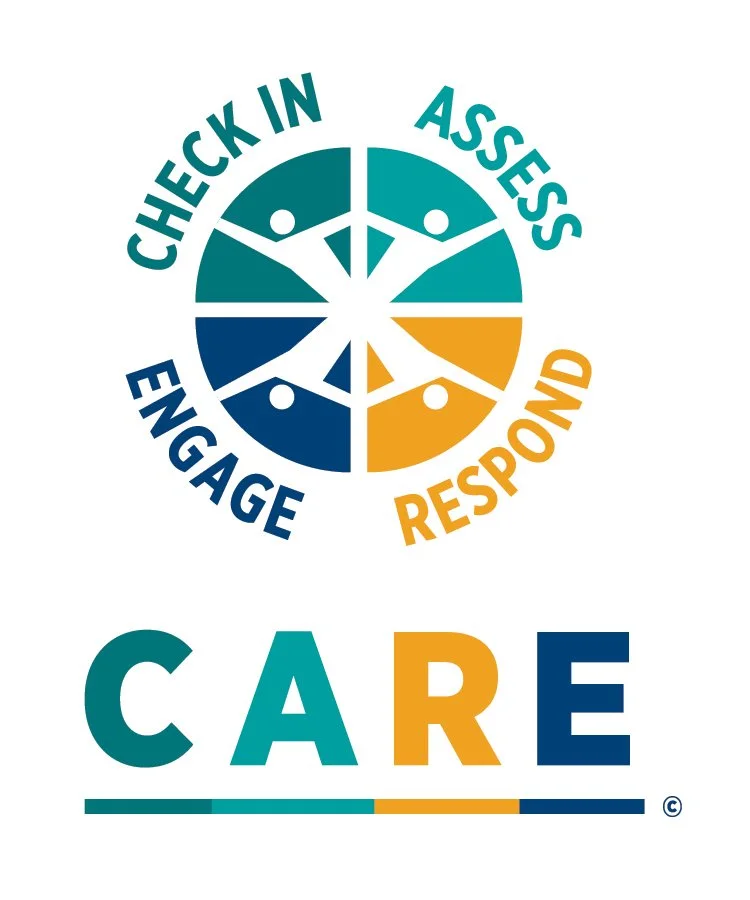
C.A.R.E. is a flexible decision-making framework built around the realities, relationships, and roles students navigate in everyday life.
Rather than prescribing a single “right” intervention, it helps students move through ambiguity, consider what is shaping a situation, recognize their own capacity and position within it, and choose a response that fits both who they are and the needs of the person or community involved. C.A.R.E. helps students navigate that uncertainty, assess what is happening, and choose a response that feels authentic and possible for them.
Rather than prescribing a single set of intervention strategies or suggesting there is a “perfect” response for every situation, C.A.R.E. gives students a way to make decisions in real time. It helps them consider what is happening, what they know and don’t know, their own safety and capacity, the relationships and power dynamics at play, and what response feels possible and authentic to them.
The goal is not to teach students to choose the “right” intervention from a list. It is to build their confidence to act earlier, thoughtfully, and in ways that fit the moment.
From individual action to collective responsibility
Bystander intervention has always been about more than one person stepping into one moment.
The environments we create determine what becomes normalized, what gets challenged, whose discomfort gets noticed, who feels able to speak, and whether people believe someone else will stand with them when they do.
That means prevention cannot depend solely on the person with the most confidence, power, or proximity to harm.
C.A.R.E. gives students multiple ways into that practice. It recognizes that identity, community, relationships, safety, and influence affect how people experience both harm and opportunities to respond. It builds confidence by offering choices that feel possible instead of prescribing an ideal performance. It places the needs and agency of the person experiencing harm at the center while giving others a meaningful role in creating safer communities.
Most importantly, it helps students begin before they have every answer.
Because the moment when something feels off is not insignificant.
It is information.
It is an opportunity to pay closer attention, ask a question, find an ally, offer support, or change what happens next.
And when C.A.R.E. becomes something a community knows how to practice (before, during, and after harm) individual acts of intervention can become something larger:
A culture of connection, belonging, and collective accountability.