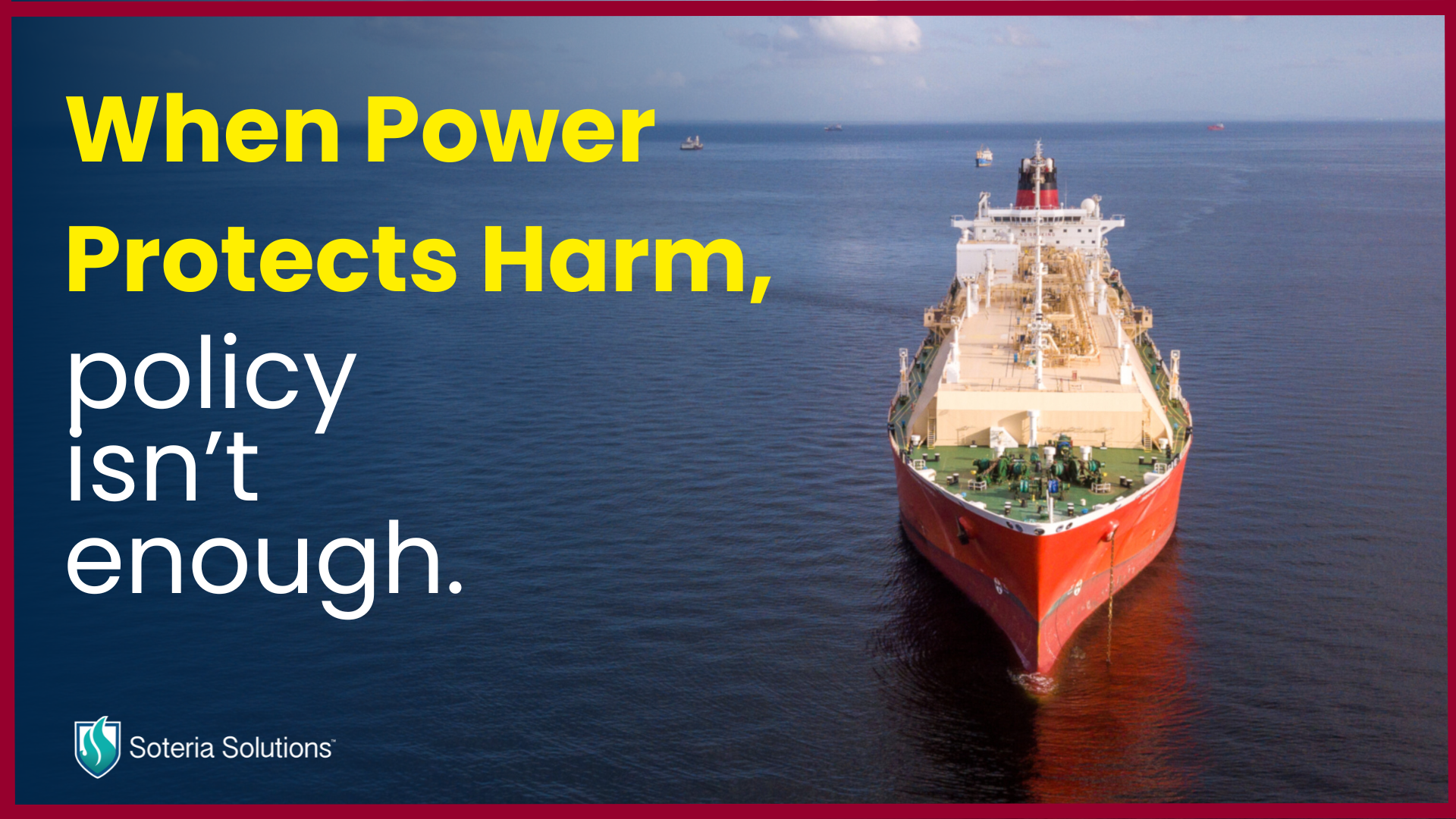
When Power Protects Harm, Policy Isn’t Enough
Turning Promises into Protection: #MyHarassmentFreeShip
By Meera Seshadri, MSPH
Article Reflections: IMO to mandate anti-harassment training for seafarers by 2026. Read the full article here: https://bit.ly/4ayYMWS
The 2025 International Day of the Seafarer highlights an urgent, often overlooked issue: harassment, bullying, and discrimination at sea. Ships are isolated, high-pressure workplaces, where hierarchies are steep and reporting is often risky. The #MyHarassmentFreeShip campaign, led by the IMO, calls for zero tolerance, but creating real change requires more than policy. It requires structural, context-driven solutions that employees can not only buy in to, but feel beholden to.
“Zero tolerance only” policies can inadvertently suppress reporting; individuals may fear consequences ranging from job loss for themselves to others, ostracization and isolation, and additional incidents of harassment. This leads to the minimization or normalization of harmful behavior, as such policies prioritize punitive responses after incidents occur, diverting attention from proactive, preventative strategies that could reduce the likelihood of harassment or bullying. Moreover, by framing misconduct primarily as an individual failure, zero tolerance approaches overlook the structural, cultural, and organizational factors that facilitate and sustain harmful behaviors.
Soteria Solutions at the Helm
Soteria Solutions has partnered with NOAA in the past to understand high-risk, isolated work environments, providing training that addresses not only individual behaviors but the structures and ideologies that enable harassment. By focusing on how power, identity, and environment intersect, we equips leaders and crews with tools to:
Recognize harassment early
Intervene safely as bystanders
Build tools in “strategic resistance” when bystander intervention is not an option
Why This Matters at Sea
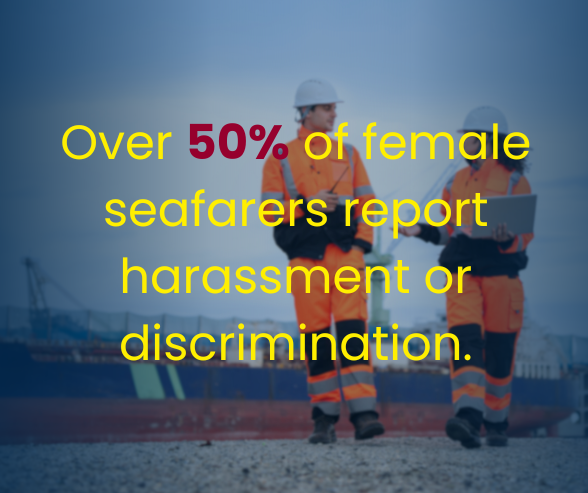
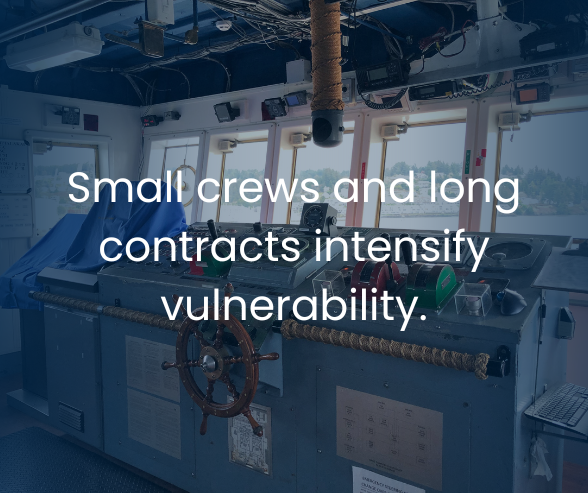

Our approach emphasizes that harassment is systemically enabled, not just an individual problem. By contextualizing training to real-world maritime conditions, we help organizations move beyond compliance toward acknowledgment and prevention, empowering individuals to act and leaders to be accountable.
Structural Solutions for Real Change
The IMO’s campaign and regulatory updates, including amendments to the STCW Code, mandate training on harassment prevention starting in 2026. Our work complements these shifts by:
Translating lessons from NOAA field operations to maritime settings
Centering intersectional vulnerabilities, including gender and other marginalized identities
Embedding prevention into organizational systems rather than leaving it to chance
Key Takeaways for Leaders
Harassment thrives where systems are silent; structural interventions are essential.
Prevention is most effective when context-specific and evidence-based.
Empowering bystanders, clarifying reporting pathways, and addressing ideological inequities reduces risk
True safety and equity depend on understanding power, identity, and environment as interconnected forces.
Soteria Solutions demonstrates that prevention is about building systems that protect dignity and ensure equity. For every seafarer, and every crew, a harassment-free ship is achievable, but only when action addresses the structural conditions that make harm possible in the first place.
Looking Ahead
Discover how Soteria Solutions can help your organization reduce risk, build resilience among staff, and foster a safer, more respectful workplace culture.