
The Cost of Silence: How Abuse Cycles Affect Employees and What Workplaces Can Do

The Hidden Toll of Abuse and Why Workplace Training Matters
By Casey Laplante
Report Reflections, Read the full report here: https://futureswithoutviolence.org/wp-content/uploads/2025/11/Hotline-Report.pdf
A new report, ‘The Intersection of Work and Abuse’ released by Futures Without Violence and the National Domestic Violence Hotline, sheds powerful light on issues many employers underestimate: the profound ways domestic violence, dating violence, sexual assault, and stalking affect employees at work, and how workplace culture can either support survivors or unintentionally keep them trapped in unsafe situations and cycles of violence. For HR and organizational leaders, the findings from a survey of over 2,000 survivors make one message clear: the workplace is not separate from employees’ personal lives. Survey respondents represent survivors who were employed at the time that they experienced violence, with 69% of respondents who were full-time salaried employees and another 20% who were part-time employees. Challenges employees face outside of the workplace, including experiences of abuse, directly impact their safety, well-being, ability to contribute effectively at work, and their overall economic security. The impacts of abuse follow survivors into their workday even when they try not to have this occur, and when workplaces aren’t equipped to respond effectively, the consequences can be devastating both for the survivor and the organization.
The report highlights that an overwhelming majority of survivors, 79%, say that abuse made it harder for them to work. This isn’t surprising when you consider the reality of living with ongoing fear, coercive control, and constant vigilance. Those emotional and logistical burdens make it difficult to concentrate, manage time, or maintain consistent attendance, yet many employees push through in silence. One respondent stated, “After each incident, I would end up being late for work or take the whole day off if I had bruises that I couldn’t hide.” More than half of survivors in the report, 53%, said that they never disclosed their situation to their workplace. Their reasons included fear of retaliation, shame, worries about job loss, and uncertainty about how their employer might respond, among others. As a result, workplaces often see only the symptoms (e.g. absenteeism, performance changes, disengagement, or leaving their jobs) without understanding the true underlying cause.
What we see in this important report is how clearly the data paints a picture of the very real cycle survivors often face. Many expressed that they needed time off to manage their mental health, attend counseling, or find a new place to live, yet a large number were unaware of the job protections, leave options, or accommodations available to them. This lack of awareness can create a vicious loop: abuse undermines their ability to work effectively, but fear of retaliation or losing their job or income can prevent them from seeking help. Economic insecurity remains one of the biggest barriers to leaving an abusive partner, and when workplaces lack clear policies, training, or take punitive action such as termination, they unintentionally reinforce the very conditions that trap survivors in this cycle. As one respondent shared when asked how an employer could have provided tangible support: “Paid leave would have been a godsend. I could not fathom making an escape without it. It was impossible.”
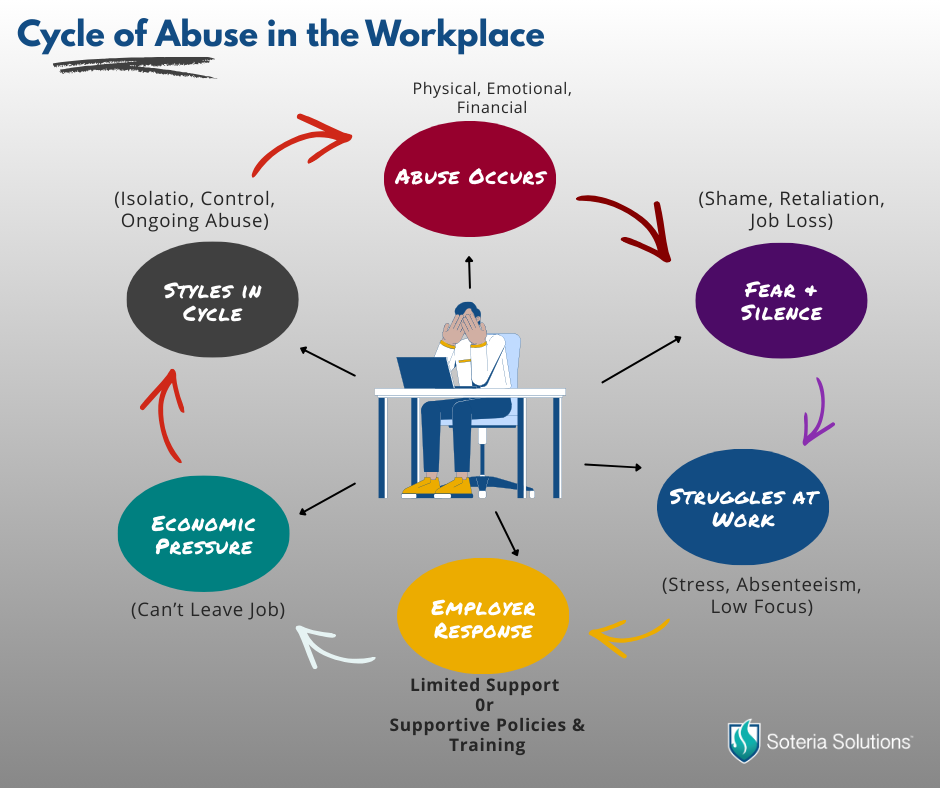
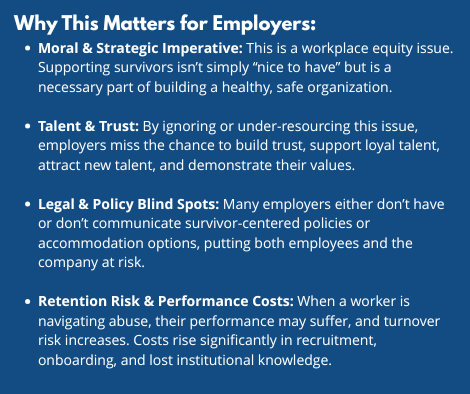
For employers, this is not only a human issue but a workplace one. Abuse affects productivity, retention, team dynamics, and organizational culture. When employees don’t feel safe bringing themselves to work and disclosing or seeking resources for personal challenges, especially ones as serious as abuse, all trust erodes. Survivors often experience stress, anxiety, decreased concentration, absenteeism, and interruptions caused by abusers, all of which can reduce productivity and increase turnover. Replacing an employee who leaves (even if due to circumstances outside of work) costs a company significantly in recruitment, onboarding, and lost institutional knowledge. Conversely, organizations that actively acknowledge this issue and prepare managers, HR teams, and the full staff as prosocial bystanders to respond with empathy and clarity help create supportive work environments where people feel valued, protected, and understood. Employees are more likely to stay with the organization, engage consistently, and contribute at a higher productivity level when they know their employer values their well-being. It also reduces the likelihood of crisis situations spilling into the workplace, enhances psychological safety, and strengthens the company’s reputation as a responsible and caring employer, all of which attracts more talent to the organization.
This is where the recommended solution for workplace training and education can be a helpful and necessary resource for workplaces. Implementing survivor-centered policies, training teams in trauma-informed communication and prosocial bystander skills, and ensuring employees know their options, rights, and available accommodations all make a tangible difference. These steps help employees feel safe getting the resources that they need, reduce stigma, and ultimately strengthen the organization’s capacity to support its workforce.
Finally, the report underscores the importance of simple but meaningful communication. Employees cannot utilize protections or resources that they do not know exist. Leaders should regularly remind their teams about supportive policies, leave options, employee assistance program resources, and confidential pathways to seek help. It is equally important to train supervisors and HR staff on how to respond appropriately when someone does disclose abuse and without judgment, without pressure, and with a clear understanding of how to connect them to the right support. Training on Effective Communication can further equip managers and HR professionals with the skills they need to navigate these conversations with confidence, empathy, and clarity.
The message for HR and leadership is clear: your organization already employs survivors, but the critical question is whether you have the policies, training, and support in place to respond and support your employees appropriately. Taking action on this important issue now sends a powerful signal that your workplace is not just a place of employment, but a place where people can be safe, supported, and able to thrive even in the midst of a personal crisis. Schedule a free consultation with Soteria Solutions to learn how we can support your efforts to make your organization stronger, more human, and more resilient.
Looking Ahead
Discover how Soteria Solutions can help your organization reduce risk, build resilience among staff, and foster a safer, more respectful workplace culture.